
If you live in cities like Mumbai, Bengaluru, Pune, Delhi, Gurgaon, Hyderabad, or Chennai, chances are you’re dealing with a silent but powerful hair enemy — hard water.
Hard water is one of the most common yet overlooked causes of hair fall, frizz, dryness, scalp irritation, and rough texture, especially in Indian homes with borewell supply, overhead tanks, or untreated municipal water.
You may try:
-
Expensive shampoos
-
Oils and hair spas
-
Serums and treatments
…but nothing truly works until the hard water issue is addressed.
In this science-backed guide, we explain:
-
What hard water actually is
-
How it damages hair and scalp
-
Why it leads to hair fall
-
How to fix hard water hair with the right routine
-
Prevention strategies that work in Indian conditions
Let’s decode the problem properly.
Chapter 1: What Exactly Is Hard Water?
Hard water contains high concentrations of minerals, mainly:
-
Calcium
-
Magnesium
-
Carbonates
-
Salts and metal ions
While these minerals are generally safe for drinking, they are harsh on hair and scalp.
When you wash your hair with hard water, these minerals don’t rinse away easily. Instead, they settle on:
-
The hair shaft
-
The scalp surface
This creates a mineral buildup layer that slowly damages hair health.
Chapter 2: What Hard Water Does to Your Hair (Scientifically)
1. Mineral Buildup on the Hair Shaft
Calcium and magnesium bind tightly to the hair cuticle, forming a rigid coating that:
-
Blocks moisture absorption
-
Makes hair rough and dry
-
Increases frizz
-
Leads to breakage
Mineral buildup = dehydrated hair.
2. Weakens the Hair Root
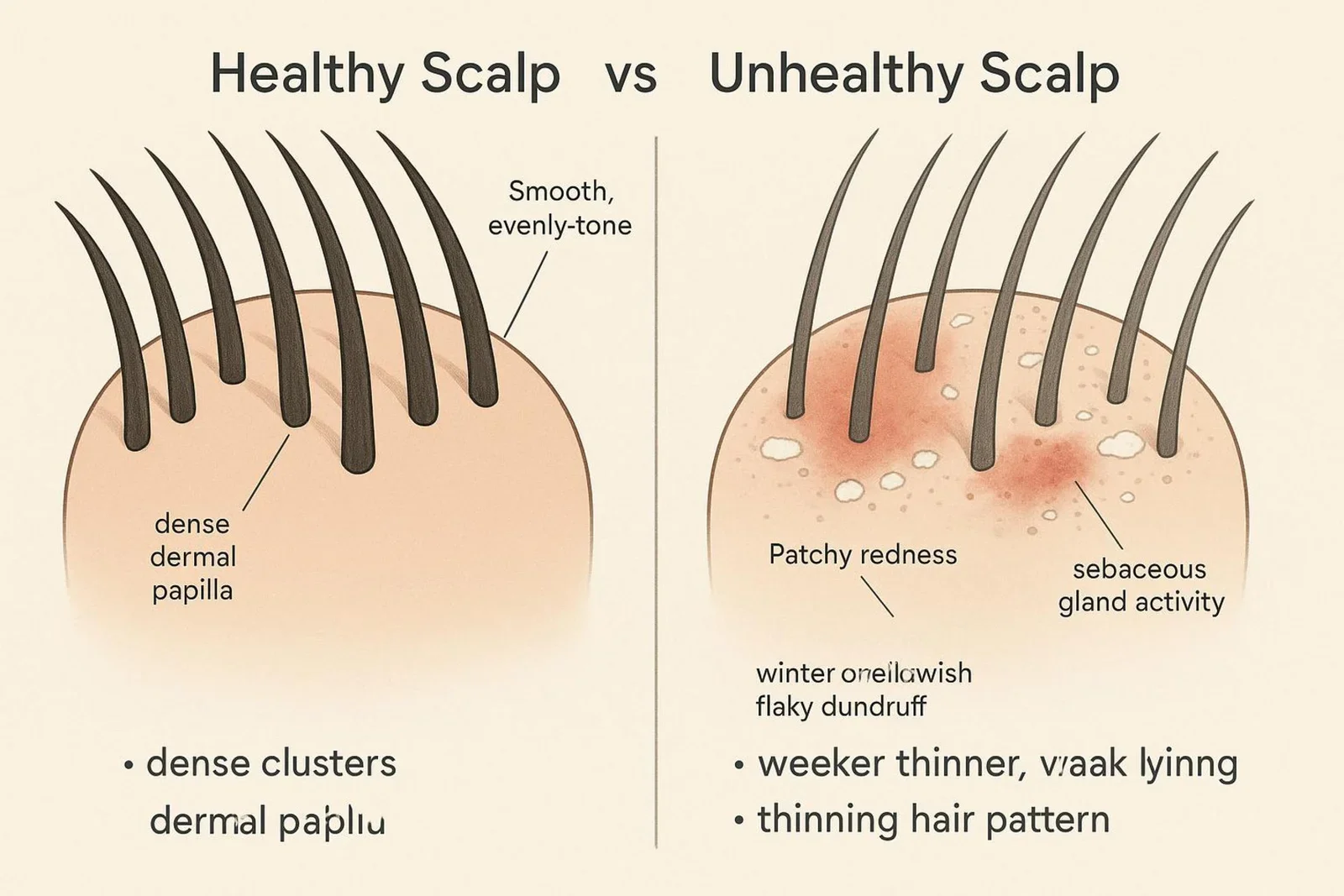
Minerals also accumulate on the scalp, clogging hair follicles. This leads to:
-
Weak roots
-
Scalp sensitivity
-
Inflammation
-
Poor blood circulation
A mineral-heavy scalp environment makes it difficult for hair to grow strong.
3. Disrupts the Natural Scalp pH
Healthy hair thrives at a slightly acidic pH of 4.5–5.5.
Hard water is alkaline.
An alkaline scalp causes:
-
Frizz and swelling of hair strands
-
Weakened cuticles
-
Dryness and irritation
-
Dandruff-like flakes
4. Reduces Effectiveness of Shampoos & Conditioners
Hard water reacts with cleansing agents, forming soap scum.
As a result:
-
Shampoo doesn’t lather well
-
Cleansing becomes ineffective
-
Scalp feels greasy even after washing
Conditioners also fail to absorb properly because minerals coat the hair surface.
5. Causes Breakage & Split Ends
Chronic dryness weakens keratin bonds inside the hair shaft, leading to:
-
Snapping
-
Tangling
-
Rough texture
-
Split ends
6. Accelerates Colour Fading
For colour-treated hair, hard water:
-
Strips dye molecules faster
-
Causes dull, brassy tones
-
Makes colour look lifeless
Chapter 3: Signs You Have Hard Water at Home

You likely have hard water if you notice:
-
Hair feels rough even after conditioning
-
Persistent frizz and dryness
-
Excessive hair fall
-
Dull, lifeless texture
-
No shampoo feels effective
-
Soap doesn’t lather easily
-
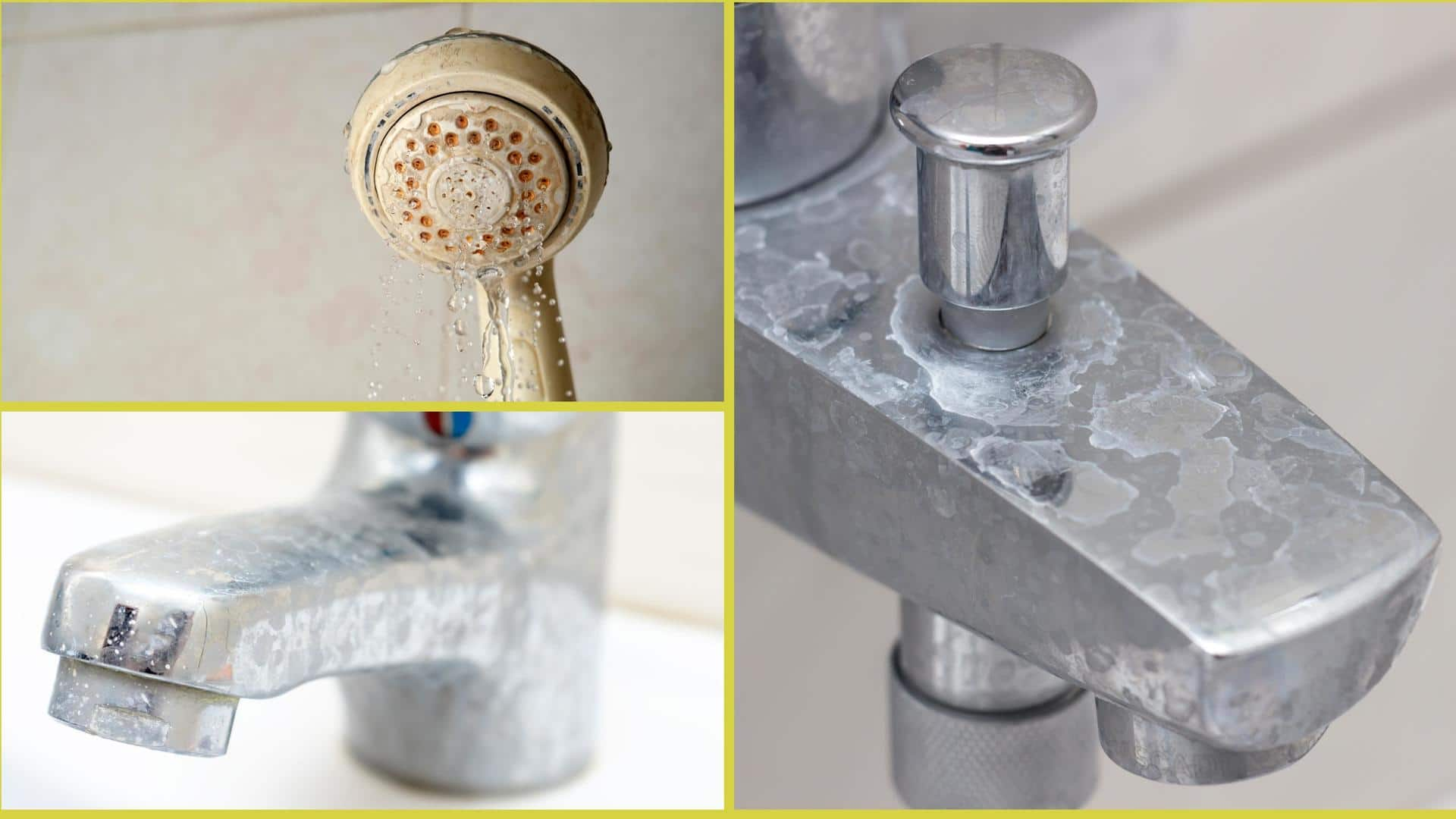
White stains on taps or tiles
-
Skin feels dry after showers
If 4–5 signs match, hard water is affecting your hair.
Chapter 4: How Hard Water Causes Hair Fall
Hard water leads to hair fall through multiple pathways:
-
Clogged follicles → reduced oxygen and nutrient supply
-
Inflamed scalp → itching, flaking, sensitivity
-
Brittle strands → snapping and thinning
-
Disrupted growth cycle → early shedding phase
This explains why many people say:
“Ever since I moved to this city or building, my hair has been falling a lot.”
In most cases — it’s the water.
Chapter 5: How to Fix Hard Water Hair (Dermatologist-Backed Routine)
You may not be able to change the water supply, but you can control its effect on your hair.
Step 1: Use a Chelating or Clarifying Shampoo (Once a Week)
Chelating agents bind to minerals and remove buildup.
Look for ingredients like:
-
EDTA
-
Citric acid
-
Mild fruit acids
-
Amino acids
Gentle clarifying shampoos, like those in The Skin Story hair care range, help remove mineral residue without stripping natural oils.
Step 2: Switch to a Sulphate-Free Gentle Shampoo
For regular washes, choose shampoos enriched with:
-
Keratin & Biotin
-
Moringa
-
Aloe vera
-
Argan oil
-
Zinc and amino acids
These support scalp balance and reduce dryness.
Step 3: Condition Every Single Time
Conditioner is non-negotiable in hard water areas.
Look for:
-
Argan oil
-
Shea butter
-
Keratin
-
Fatty alcohols (skin-safe)
Step 4: Use a Deep Repair Hair Mask (Weekly)
Masks restore moisture and strengthen damaged bonds.
Key ingredients:
-
Ceramides
-
Proteins
-
Amino acids
-
Nourishing oils
A strengthening or smoothening mask from The Skin Story can help reduce hard-water-induced breakage.
Step 5: Add a Hair Growth Serum (Daily)
Hard water weakens roots — growth serums support follicle health.
Look for:
-
Redensyl
-
Hairiline
-
Rosemary extract
-
Peptides
Growth serums with Redensyl & Hairiline, like The Skin Story Advanced Hair Growth Serum, help strengthen follicles after mineral stress.
Step 6: Final Rinse With RO or Filtered Water
You don’t need a full shower filter.
Just use RO or filtered water for the final rinse — it significantly reduces mineral residue.
Step 7: Use a Microfiber Towel
Reduces friction and prevents breakage in already weakened hair.
Step 8: Oil Before Shampoo (Not Overnight)
Apply lightweight oil 20–30 minutes before washing:
-
Protects cuticle
-
Reduces mineral penetration
-
Softens hair
Avoid overnight oiling — it traps minerals on the scalp.
Chapter 6: Lifestyle Habits That Help
-
Stay hydrated
-
Increase protein intake
-
Avoid excessive heat styling
-
Use leave-in serums
-
Trim regularly
Chapter 7: How Long Does Recovery Take?
-
2–3 weeks: Less dryness, better texture
-
5–6 weeks: Reduced hair fall
-
8–12 weeks: Healthier shine and strength
-
3–6 months: Improved density and volume
Consistency is key.
Conclusion
Hard water is one of the biggest hidden causes of hair fall and damage in India.
The good news? With the right clarifying care, sulphate-free shampoos, conditioning routines, weekly masks, and science-backed growth serums, hair damage caused by hard water is reversible. If you’re beginning your hair recovery journey, explore gentle shampoos, nourishing conditioners, strengthening masks, and daily growth serums designed to support healthier hair in hard-water conditions.